Nobody's Driving Forty Minutes for a $25 Lamp
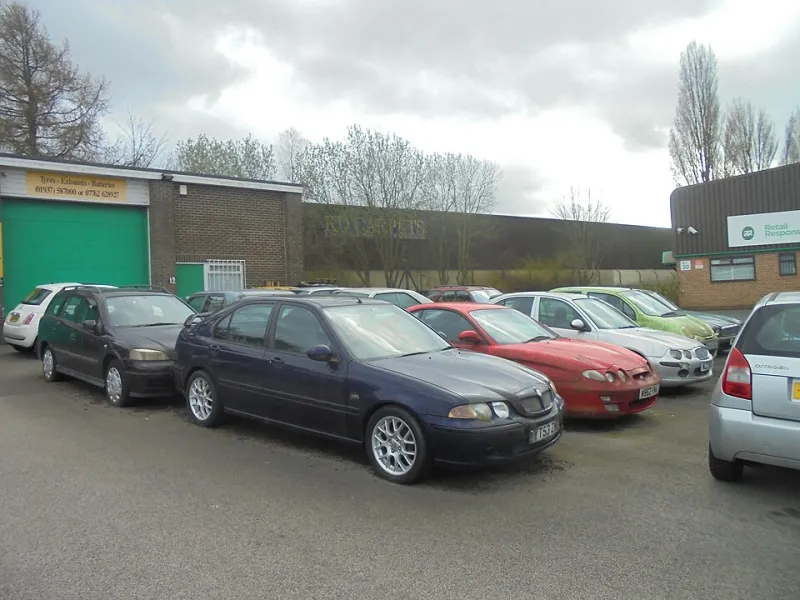
Photo: Tony Webster, CC BY-SA 3.0, via Wikimedia Commons
There's a phrase that does more damage to a listing's final price than any scratch, stain, or missing remote: "No delivery. Pickup only."
It isn't the phrase itself. It's the invisible map it draws. Every ad on a local marketplace comes with a radius attached, and most sellers never think about it until week three, when the item is still sitting in the garage and the messages have dried up.
The circle you never drew
Buyers don't price an item. They price the item plus the trip.
A $25 floor lamp is a good deal if it's nine minutes away. The same lamp at forty minutes each way — plus a gallon of gas, plus an hour you're not getting back, plus the small risk that the seller flakes — is no longer a deal at all. It's a chore with a lamp attached.
This is why the exact same model of table saw can sit unsold at $180 in one town and move in a day at $240 in another. Condition is nearly identical. The variable that changed is how many people live inside the drive.
Why distance behaves like a price tag
Think of the trip as a surcharge the buyer pays directly to their own gas tank and calendar. In dense suburbs, that surcharge is small, so listings compete almost entirely on price and condition. Out where the next town is fifteen miles of two-lane highway, the surcharge gets big enough to reorder everything.
There's a practical floor to this, too. Between fuel, tire wear, and the value of an hour, a round trip of any real distance carries a cost that's easy to underestimate — the kind of number people quote offhand and then never actually calculate. Run the math once on a Tuesday afternoon and you'll stop accepting 45-minute drives for $30 items.
Curb alerts: the urban version of the rule
In cities, the radius shrinks to blocks. That's why free-and-curbside posts work so well there — a dresser on the sidewalk at 6 p.m. will be gone by 7:30, because the trip cost is a two-minute walk and a friend with a hand truck.
It's also why city sellers can get away with "porch pickup, address sent after you confirm." The buyer's risk is low enough that the inconvenience doesn't kill the deal. Move that same post twenty miles out and it dies quietly, because now you're asking someone to commit to a 40-minute round trip on the strength of a photograph.
Meet halfway: the rural negotiation
Out in the country, the radius gets negotiated out loud. "I can meet you at the Tractor Supply parking lot in [town]" is a standard clause in half the ads in a rural feed, and it exists because both parties understand that whoever absorbs the mileage loses something.
Watch how the price moves when that happens. A seller who offers to meet halfway is effectively discounting, because they've decided the trip is worth more than the last $20 of asking price. A buyer who volunteers to drive the full distance is quietly offering a premium without ever saying a number.
Meeting-lot trades also come with a useful side effect: a well-lit, busy parking lot is the safest possible venue for a cash exchange between strangers. Convenience and caution point in the same direction.
What "will deliver" actually costs
Delivery isn't free, and it shouldn't be priced as if it is. A seller hauling a couch twenty miles is spending fuel, time, a favor from a friend with a truck, and the risk of a scratch on somebody else's stairwell.
If you're pricing delivery, build it as a separate, visible line: a flat local fee inside a set radius, a higher tier beyond it, and a hard line past which you simply don't go. Buyers respect a clear boundary far more than a vague "small fee for delivery." Ambiguity reads as a hidden charge, and hidden charges kill messages.
Pricing at the edge of the circle
Here's where it gets useful. If your item is small, light, and in demand, price it normally — someone will make the trip. If it's bulky, heavy, or oddly shaped, you're competing against every similar thing within driving distance, and your price has to clear the trip.
A few habits that reliably help:
- Bundle small items. One listing with the lamp, the side table, and the box of paperback books is one trip instead of three, and that's worth real money to a buyer.
- Say the neighborhood, not just the city. "Five minutes off exit 12" converts better than a zip code a stranger has to look up.
- Lead with pickup flexibility if you have it. "Porch pickup, available all weekend" removes the scheduling tax, which is often the bigger obstacle.
- Accept that a far-away item is a discount item. If you're 35 minutes from the population center, price accordingly or plan to hold it longer.
- Offer the meet-up before you're asked. The first person to suggest the halfway lot usually controls the terms.
The rule that beats the condition report
Buyers will ask about scratches because that's the question the listing format invites. But the decision they're actually making is geographic: is this thing close enough to be worth the errand?
Answer that question before they have to ask it — put the general area in the ad, say what you'll do about the trip, and price as if the mileage is part of the merchandise. Because in every local marketplace in the country, it already is.