Nine Minutes to Mobilize: The Unseen Rescue Network Behind Every Lost Cat Poster
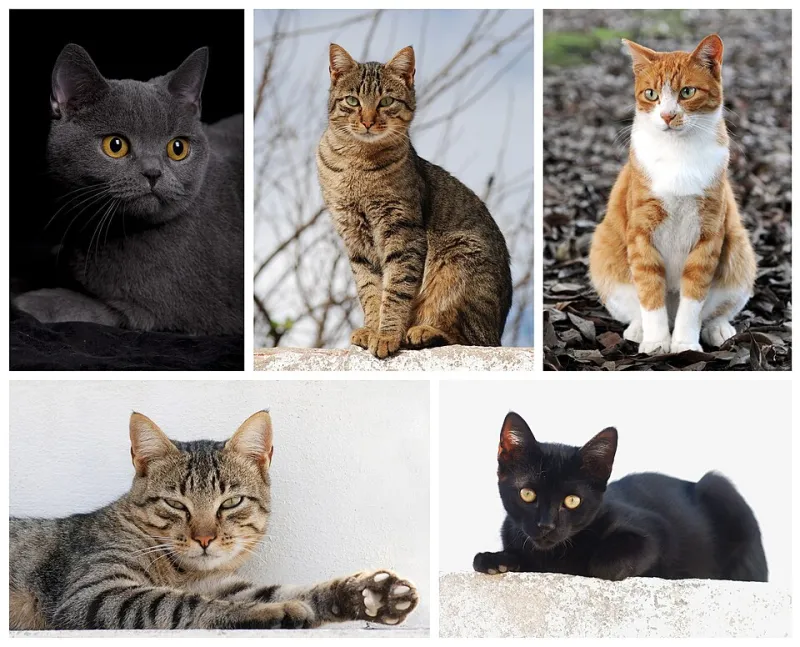
Photo: Alvesgaspar (compilation), CC BY-SA 3.0, via Wikimedia Commons
At 7:42 on a Tuesday evening, a woman in a Dayton suburb posts a photo of her tabby, Biscuit, who slipped out through a torn screen door. By 7:51, three neighbors have replied. One is already walking the creek behind the elementary school. Another has a humane trap in her garage, ready to deploy. A third has printed flyers and taped them to the mailboxes along Maple Ridge Drive.
Nobody organized this. Nobody paid for it. And yet, within nine minutes, a small search-and-rescue operation was underway.
Welcome to the lost pet economy — arguably the most efficient corner of the American classifieds, and the one category where strangers still trust each other completely.
The Fastest Responders on the Internet
Every listing category has its own clock. A couch listing might sit for a week. A used riding mower might take a month to move. But lost pet posts operate on what volunteers half-jokingly call "golden hour logic" — the idea that a scared animal stays within a quarter-mile radius for the first day, so every minute counts.
That urgency has produced a strange and wonderful byproduct: a national corps of amateur responders who treat a missing beagle the way storm chasers treat a tornado warning. They know the drill. They know that cats hide and don't come when called, that dogs often travel at night, that you should leave out a worn T-shirt that smells like home. Many of them have never met the pet's owner and never will.
In towns across the country — from the cul-de-sacs of suburban Atlanta to the farm roads outside Des Moines — these volunteers maintain a kind of shadow infrastructure: trail cameras, feeding stations, laminated flyers in the truck bed, and a mental map of every culvert and crawlspace in a two-mile radius.
The Map Is the Message
The most fascinating evolution in this world is the rise of the crowdsourced sighting map. What started as a pushpin on a hand-drawn flyer has become a genuine data operation. Owners now drop a pin where the pet was last seen, and neighbors add sightings in real time — a pattern of dots that slowly reveals a travel corridor.
Volunteers talk about "reading the dots" the way fishermen read weather. A cluster of sightings near the back of a church parking lot? That's where the feeding station goes. Sightings jumping across a four-lane road? Time to warn the searchers before someone darts into traffic.
It's crowd science without the grant money, and it works. National lost pet recovery groups claim reunification rates that would make any missing-property listing weep with envy. The humble classified ad — a photo, a cross street, a phone number — has quietly become the backbone of a functioning mutual aid network.
Why Lost Pets Get Trust That Everything Else Doesn't
Here's the puzzle: the same internet where people assume every marketplace seller is running a scam treats lost pet posts as gospel. Why?
A few reasons, according to the people who run these networks. First, there's nothing to gain. Nobody profits from a lost cat post, so suspicion has nowhere to attach. Second, the stakes are legible — everyone can picture their own pet missing, so empathy arrives pre-installed. Third, the ask is small: keep an eye out, share the post, check your garage. Low-cost requests get low-friction cooperation.
Compare that to the rest of the classifieds, where every interaction begins with "Is this still available?" and ends with a negotiation. Lost pet posts skip the transaction entirely. They're pure community — the digital equivalent of a neighbor knocking on doors.
What Other Listings Could Learn From the Cat People
There's a lesson buried in all of this for anyone who runs a community board or browses one. Lost pet posts work because they're hyperlocal, time-stamped, and personally narrated. "Biscuit is shy, responds to a whistle, hates rain" tells you more than any product spec sheet ever could.
The best local listings borrow the same DNA. A garage sale post that mentions the story behind the item. A rideshare board that names the regulars. An announcement that tells you exactly which block to avoid tonight because of road work. Detail builds trust; trust builds response.
So the next time you see a slightly blurry photo of a gray cat with the caption "DOES NOT COME WHEN CALLED," take a second look. Behind that post is one of the last truly functional systems of neighbor-helping-neighbor in American life — built one sighting, one flyer, and one storm drain check at a time.
And if you happen to see Biscuit? You know what to do.