Leave It by the Mailbox: How the Front Porch Became America's Busiest Checkout Counter
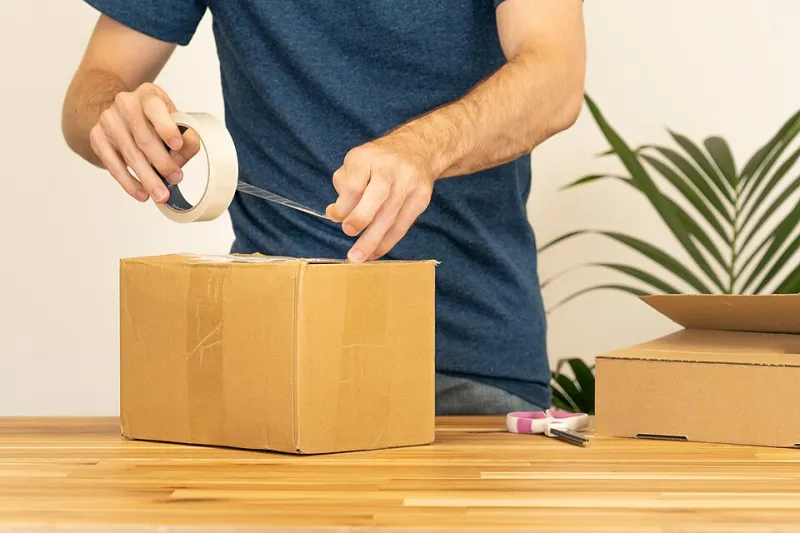
Photo: Meanwell Packaging, CC BY 2.0, via Wikimedia Commons
Somewhere in suburban Ohio, a wicker bench on a front porch is doing more business this week than a mall kiosk. A dutch oven sold on Tuesday. A set of golf clubs left Wednesday, wrapped in a garbage bag against the rain. By Thursday, the same bench will host a dresser drawer, a bread machine, and — if the buyer texts back — a slightly anxious beta fish in a travel cup.
None of these transactions involved a handshake. Most didn't involve a human watching. Welcome to the porch pickup economy, the quiet infrastructure project that American classifieds built without anyone noticing.
The Deal That Moved to the Doorstep
Before 2020, selling a used table on a local listings site meant an appointment. You'd exchange messages, settle on a time, and stand in your driveway making small talk while a stranger kicked the tires. Then the pandemic hit, and the meet-and-greet became a liability. What replaced it was a workaround so simple it stuck: post the item, mark it contactless, set it on the porch, and let the buyer come to it.
The format solved every friction point at once. No scheduling gymnastics. No awkward small talk. No inviting a stranger onto your property. Sellers discovered they could keep a listing live while working a full shift, and buyers discovered they could grab a vacuum cleaner on the way home from work without ever speaking to another adult.
What started as a health precaution calcified into a preference. Scroll any local marketplace today and you'll see it: "porch pickup only," "contactless drop," "cash in mailbox — will confirm after." The front steps became a fulfillment center with a doormat.
The Fifteen-Minute Window
Every porch pickup runs on a piece of etiquette so widely understood that almost nobody writes it down: the pickup window. The seller messages an address. The buyer says "OMW." And from that moment, an invisible clock starts — usually fifteen minutes, sometimes thirty if traffic on the interstate is bad.
"If you say you're on the way and you're not there in fifteen, I've already put it back in the garage," explains Marlene, a retired school secretary outside Toledo who has sold more than 200 items from her porch since 2021. "I'm not going to sit on my own porch waiting on a stranger. That's the deal. They know it, I know it."
The window is a trust mechanism disguised as a convenience. It protects the seller from no-shows who treat listings like wish lists. It protects buyers from drive-by disappointment when someone else snaps up the item first. And it creates a strange new social contract: two people who have never met, coordinating a cash transaction through text with the precision of an airport handoff.
Violate the window, and the consequences are immediate and, in the world of local classifieds, severe. You'll be blocked, reported, and — worst of all — quietly discussed in the neighborhood Facebook group.
Drop Zones and the Logistics of Trust
The more interesting evolution is the drop zone: sellers who've turned their porch into a standing distribution point for multiple items, multiple buyers, sometimes on the same afternoon. A grandmother in rural Georgia keeps a plastic tote on her porch rail labeled with masking tape. Buyers pull the item, leave the cash, and go. She checks the tote after dinner.
It sounds reckless. It mostly works, and the reasons why say something good about the communities running them. Small-town and neighborhood-level marketplaces run on reputation loops — the same buyer and seller circles overlap at the school fundraiser, the church potluck, the youth soccer field. Stealing from a porch tote isn't just theft; it's social suicide with witnesses.
The cash-in-mailbox variant is the boldest expression of the system. A seller in Wisconsin Rapids leaves a tackle box by the mailbox with a price taped inside the lid. "Ninety-some percent of the time, the money's just there," he says. "The times it wasn't, I figure that's the cost of doing business on an honor system. It's still cheaper than a storage unit."
The Etiquette Nobody Wrote Down
Like any functioning economy, porch pickup has developed rules — never codified, universally enforced:
- Confirm before you come. Showing up unannounced is the cardinal sin. The item may be promised, gone, or buried under three other listings.
- Exact change or digital payment. Nobody's making change for a $40 item on a $5 bill at 9 p.m.
- Take the whole thing. If the listing says "set of four chairs," taking one chair and asking about the rest later breaks the spell of the contactless deal.
- Don't knock. That's the whole point. If the seller wanted conversation, they'd have invited you in.
- Report honestly. Contactless means no test drive, no plug-in inspection. Buyers accept this risk; sellers who abuse it don't last long in the local ecosystem.
America's Busiest Retail Location
Here's the strange punchline: add it all up, and the American front porch may now host more individual sales transactions than any big-box store in the country. There are over 80 million detached single-family homes in the US, and a meaningful slice of them move at least one used item a year through a contactless handoff. No register, no receipt, no overhead — just a step, a text thread, and a fifteen-minute window.
The porch pickup didn't just survive the pandemic. It revealed something that was always there: Americans like trading with their neighbors, they just didn't always like the small talk that came with it. The front steps solved that. The bench by the door is open for business — no appointment necessary, but do text first.