Three Little Letters That Run America's Garage Sales: An Ode to 'OBO'
Photo: Mtaylor848, CC BY-SA 4.0, via Wikimedia Commons
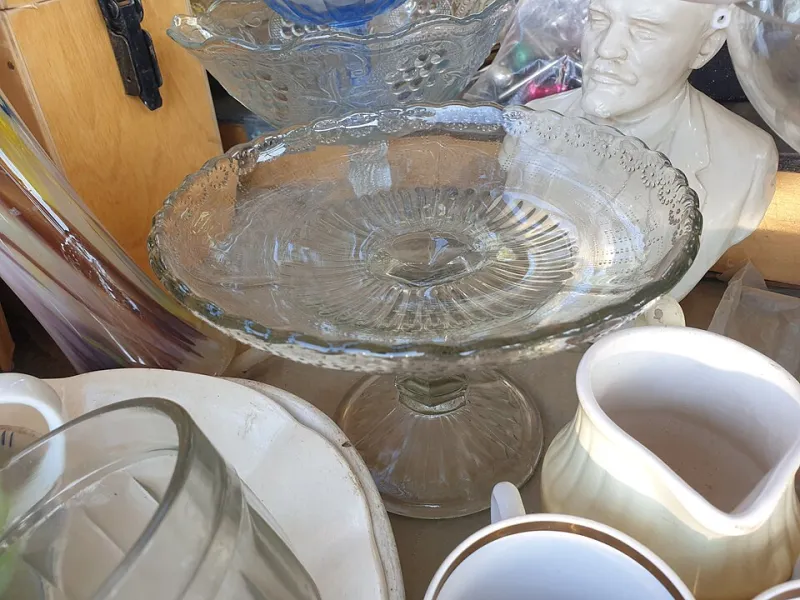
Somewhere in America right now, a folding table is sagging under a weight of mismatched coffee mugs, and taped to the front of each one is a torn scrap of paper reading $2 OBO.
Nothing about that scrap is accidental. The $2 is a number. The OBO is an opening statement. It says: I have a floor, but I'm curious what you'll bring me. It turns a transaction into a conversation, and in doing so, it might just be the most quietly American thing in advertising.
The Great Negotiation Paradox
Ask around and you'll hear it constantly: Americans hate to haggle. We admire cultures with open-air bazaar traditions, we binge shows about high-stakes dealmaking, and then we'll pay sticker price at a big-box store rather than endure four seconds of social friction.
And yet, the second something carries an "OBO," a switch flips. The seller has issued a permission slip. Suddenly the buyer who'd never dream of asking for a discount at Target will cheerfully offer twelve dollars for a $20 dresser, and both parties walk away feeling like they won.
The magic of OBO is that it makes negotiation optional and invited at the same time. The listed price stands if you want it to. The letters do the awkward work of breaking the ice so nobody has to.
Who Speaks First? A Field Guide to Unspoken Rules
Every marketplace has its etiquette, and the OBO ecosystem is no exception. A few of the unwritten laws, as passed down through decades of driveway commerce:
- Never open with an insult. Offering $5 on a $60 item isn't haggling; it's a declaration of war. The classic rule of thumb: don't go below half the ask unless you're prepared to walk away.
- Bundle with respect. Offering to take three items at a modest discount is considered gracious. Offering to take three items for the price of one is considered a personality flaw.
- The counteroffer is a courtesy, not a rejection. When a seller counters at $45 on a $50 ask, they're saying "let's finish this." Read the room.
- Silence is a strategy. The pause after your offer is the seller's move, not an invitation to bid against yourself. Newbies fill that silence. Veterans let it breathe.
- Cash in hand changes everything. Waving a twenty at the end of a yard sale, when the seller is dreaming of packing up, is the single most powerful move in the OBO economy.
Regional Flavor: Haggling Has an Accent
Spend enough time on local listing boards and you'll notice negotiation customs shift with geography.
In much of the Northeast and Upper Midwest, the culture leans toward polite, near-retail offers — "Would you take $40?" delivered with an apologetic shrug. Down South and across much of the Southwest, the dance is warmer and more elaborate; you might chat about the weather, the item's history, somebody's grandkids, before a number ever surfaces. In big coastal metros, negotiation can be brisk and transactional — lowball, counter, done in three texts.
None of these styles is wrong. They're dialects of the same language, and OBO is the phrase that translates across all of them.
Why Sellers Love the Letters
Here's the part that surprises new sellers: OBO often gets you more money, not less.
An asking price with "firm" attached filters out everyone but people willing to pay exactly that. An OBO price invites browsers to engage, and engagement is halfway to a sale. Once a buyer has imagined the item in their trunk, their mental ownership kicks in, and their "best offer" tends to creep surprisingly close to the list.
There's also a practical reality: OBO keeps a listing alive. A firm price that doesn't sell just sits there. An OBO price generates a trickle of messages, each one a chance to close.
The Marketplace Made of Handshakes
At its heart, the OBO tradition is about something bigger than savings. It's a small ritual of trust between strangers — two people agreeing, without ever saying so, to play a game with rules both of them know.
That's the same spirit behind every community board and neighborhood listing site, including the one you're reading. The classifieds have never really been about stuff. They've been about the moment two neighbors meet over a card table, toss out a number, shake on it, and both drive away feeling like they got the better end.
So the next time you tape a scrap of paper to a lawn mower, give the letters their due. OBO isn't a discount. It's a doorbell.
Have a legendary haggle story — a win, a loss, a deal that became a friendship? Community listings live on the stories behind them. Share yours in the comments.