Follow That Sofa: The Secret Second Lives of Free Listings
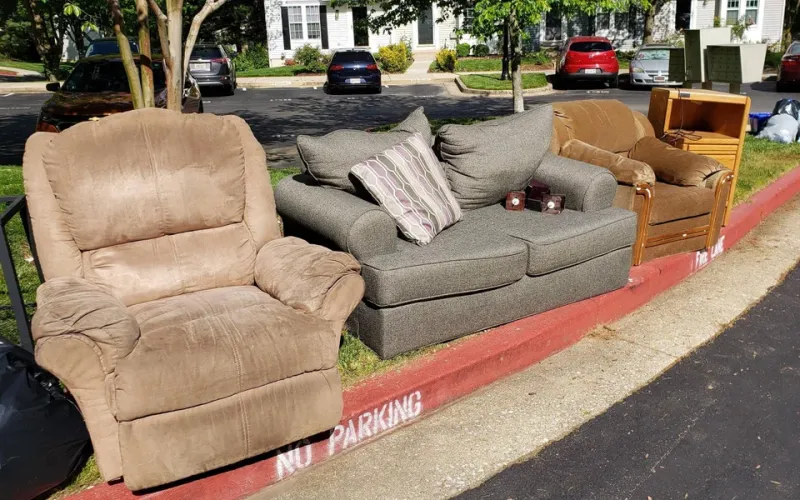
Photo: free couch curbside giveaway neighborhood porch, via blog.comfort-works.com
The post went up on a Tuesday evening in October, and it was, by the standards of local classified boards, unremarkable. "FREE sectional. Must haul. Porch pickup by Friday or it goes to the curb." Four sentences. One blurry photo. A gray fabric sofa with a sagging left cushion and a story nobody who posted it thought anyone would care about.
We cared. Because if you spend enough time reading the free sections of community boards — and here at Balkaar Ads, we confess, we do — you start to notice something strange. Items don't just get given away. They circulate. The same dresser, the same treadmill, the same suspiciously heavy piano bench will pop up in listings again and again, each time with a new owner, a new excuse, and a new porch.
So we followed one sofa. What we found was less a classified ad than a relay race — a baton passed hand to hand through a neighborhood, no money changing at any point, and everyone in the chain convinced they got the better end of the deal.
Leg One: The Downsize
The sofa's first owner was Marlene, sixty-eight, who was moving from a three-bedroom house in Dayton into an apartment near her daughter in Columbus. "You get to a certain age and you start counting doorways," she told us. "That sofa fit through two of them. The new place had one."
Marlene had bought the sectional twenty years ago at a furniture outlet, back when it was a splurge. Giving it away felt, she admitted, "like admitting something." But posting it as free rather than trying to sell it, she said, made the whole thing lighter. "I didn't want to negotiate. I wanted it gone by Friday and I wanted somebody to be happy about it."
Somebody was.
Leg Two: The First Apartment
The listing was up for forty minutes before Devon, a junior at Wright State, claimed it. He borrowed a cousin's F-150, recruited a roommate, and discovered on the porch that the sofa came apart into three sections — which, he says, "was the single best surprise of my semester."
Devon's apartment had a different relationship to the sofa than Marlene's living room had. It became the staging area for every hangout, the crash pad for out-of-town friends, the thing everybody flopped onto while arguing about whose turn it was to order. For two years, that sagging left cushion was, in Devon's words, "the good spot."
Then graduation came. And here's the detail that gets overlooked in every hand-wringing think piece about America's throwaway culture: Devon didn't put it at the curb. He put it back on the board. Free. Same rules. Porch pickup.
Leg Three: The Hand-Me-Down House
The next claimant was Priya and Sam, a couple who'd just bought their first house — a fixer-upper whose previous owners had taken the phrase "sold as-is" as a design philosophy. Their living room was, for a while, a folding chair and optimism.
The sofa wasn't their style. They knew it wasn't their style when they picked it up. They took it anyway. "It was free, it was already on the porch, and our whole living room was an echo," Priya said. "You don't turn down a sofa out of stubbornness."
Eighteen months later, with the renovation done and a proper loveseat in place, they did exactly what Marlene and Devon had done. Posted it. Free. And when a young family from the next street over came to haul it off, Sam helped carry it, then mentioned, almost as an aside, "that thing's been through like three of us now."
The new owner laughed and said theirs had come from a church rummage stop before that.
The Invisible Economy
Nobody in this chain made a dollar. Nobody reported the transactions to anyone. There's no app tracking the sofa's mileage, no ledger, no receipt. And yet an entire micro-economy of moving help, borrowed trucks, porch pickups, and small kindnesses ran underneath it for years.
Economists have a term for this — a gift economy — but the people participating in it mostly just call it "the free section." It runs on a currency that doesn't show up in any GDP report: the feeling of handing something useful to a stranger instead of a landfill.
There's a lesson in that for anyone who thinks classified boards are just transactional clutter. The listings are the visible part. Underneath them is a neighborhood quietly taking care of itself, one sagging cushion at a time.
That sofa, by our last count, is on its fourth life now, in a basement rec room two streets from where Marlene bought it two decades ago. It has never been more than a mile from its starting point. It has never once been sold.
Some things, it turns out, you just pass along.